

Author Name
Author Name
Author Name
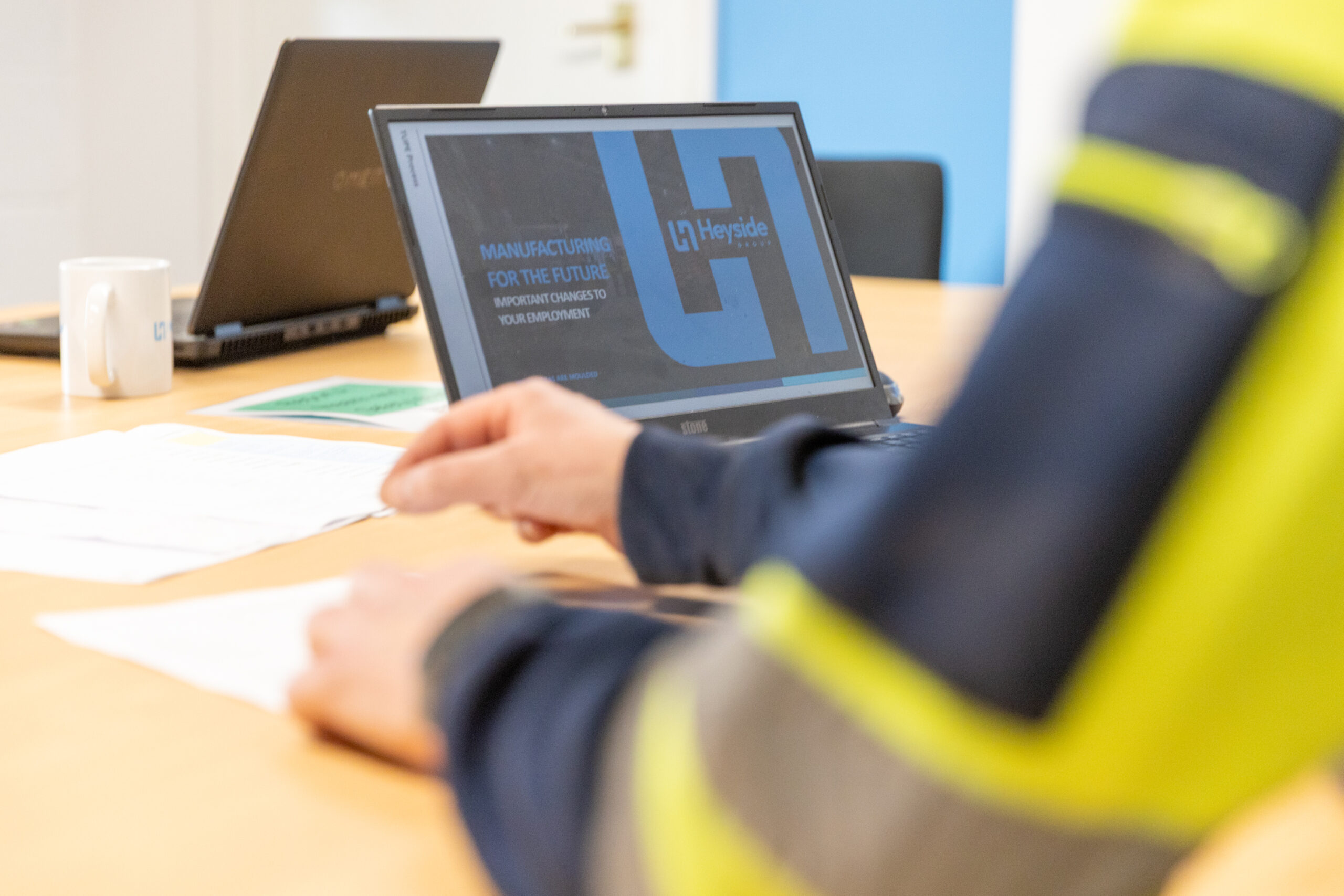
In the injection moulding industry, compliance covers how production conforms with strict quality systems, sector standards, and environmental regulations.
As compliance manager, Pete, looks after three key areas, focusing on the quality of the products we produce at Heyside, the environmental impact our production has, and the health and safety of all our employees and the visitors we have on site.
“Communication is really key in my role,” says Pete, “particularly where health and safety is concerned, I need the guys on shopfloor to feel like they can easily come and chat to me to raise any issues.”
“In the industry as a whole, compliance is important because injection moulding is quite a complex process, with health and safety issues arising from the large pieces of equipment we use”, he continues.
“Even the product we produce, the simple road cone, has its own standard as to how it should look and perform out on the road, so it’s not just our internal processes, but how the products we make keep people safe”, adds Pete.
“I originally started out in the Royal Navy as an engineer, and when I left, I moved into quality management, and I’ve probably been in a compliance-related role for 25 years now”, says Pete, talking about his industry experience.
“I’ve worked as either a quality manager or managing health and safety across a number of different industries, the majority of which have been very highly regulated, like oil and gas, aerospace, and medical devices.”
Speaking about how his experience has carried across to Heyside, Pete mentions his ability to focus on the processes, saying “the areas of quality, environmental impact and health and safety cover similar ground in whatever industry you go in. There are a few points that will be specific for Heyside, but majority of it is just making sure that the processes are in place, and that the team is following these processes and procedures.”
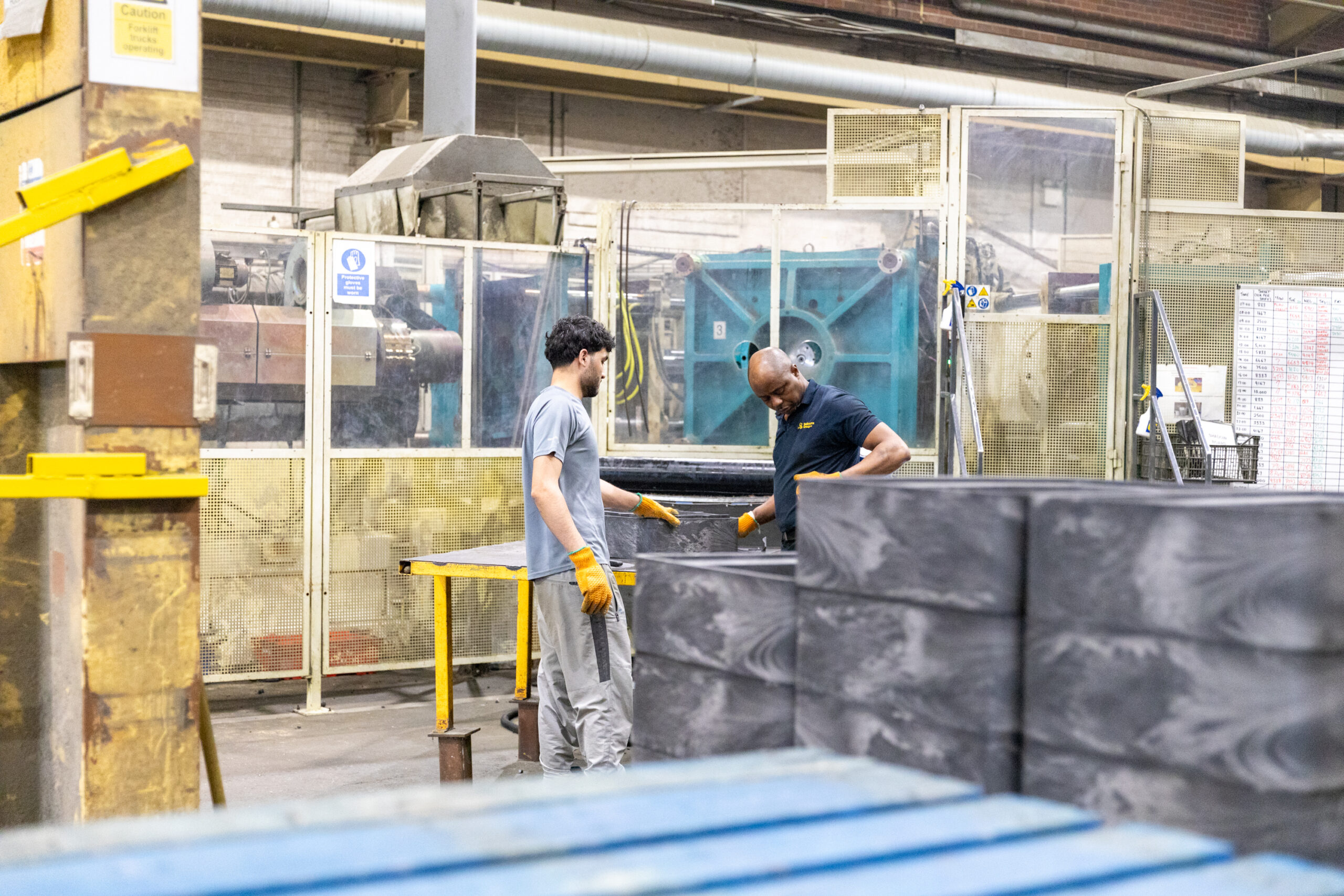
Throughout his experience across compliance roles, Pete has seen first-hand how quickly regulations change in the manufacturing sector.
“In the plastics industry, particularly with what we do with recycling products, the requirements for us using waste materials to manufacture our products isn't easy. The movement of waste is quite controlled, and we have to have an exemption or permit for producing using waste materials, which puts strict controls on how we hold the material and how we use it”, Pete mentions.
“If we were using brand new virgin materials, there’d be no restriction – that’s not us though, and it’s not the business we’ve set out to be. But, I think the biggest ongoing regulatory changes we’re seeing are definitely on the environmental side”, he continues.
“The new changes to the standards ISO 9001 and ISO 14001 are coming out this year, both looking at sustainability and ethical sourcing. They’ve arisen to address the problems we saw crop up during COVID, and again more recently with global wars and tensions”, says Pete.
“All of these changes are to make sure there are standards in place to make the industry more robust”, he concludes.

Pete has been here with us at Heyside since the start of year, and has found a great company culture, with everyone “pulling in the same direction, wanting the business to succeed”.
“We're working towards ISO 14001, which is the international framework for Environmental Management Systems, and hoping to achieve that by the end of the year. There’s also ISO 45001, which covers Occupational Health and Safety, which we’d like to achieve next year”, Pete says.
“In the next few months, we’re looking at getting our first environmental product declaration (EPD), which will allow us to measure our products from an environmental and carbon point of view with our competitors, and get that product into different markets”, he continues.
“This will be key for us, particularly with the industries we work with like construction, where they're under a lot of pressure to make sure that their buildings and sites are more sustainable and carbon neutral”.
Beyond regulatory compliance, Pete talks about the innovative ways we’re championing sustainability at Heyside.
“In producing new products, and making pellets from recycled materials, what we're doing is we're taking a difficult material to use, which is PVC, and recycling it”, says Pete. “If we can actually change that into something that works and reacts the same as a virgin material, again, then that's quite a big market”.
At Heyside, we also have the advantage of being a British plastics manufacturer, based in Oldham, with easy accessibility from the rest of the UK. Pete says this sets us apart for UK customers, saying “I've worked with lots of different countries, China, Pakistan, etc, and I used to have to go out there every three months just to make sure that the product they were manufacturing for was exactly what we wanted”.
“If you're buying in the UK from a British firm like Heyside, you've got direct access to us, so you can pop in, you can talk to us,” he continues, “it's much easier to understand the standards that we've got, and if customers need us to look at a different accreditation, we can work with them and implement it probably much quicker than other countries.”
And this sentiment is replicated across our processes, with Pete saying “as Heyside grows and changes, we need to make sure that that can react quickly to the changes in the market, the changes in legislation, and I think we are very good at that, we're very flexible, and that’s why customers choose us.”
FAQS
CONCLUSION
Ready to start your project?
Get in touch with Heyside Group to discuss your idea, request a feasibility review,
or explore tooling options tailored to your application.
"*" indicates required fields